
Is Long Term Care Insurance Worth It
People don’t research long-term care insurance out of curiosity. The question usually surfaces after something changes — a parent needs help at home, a diagnosis alters future plans, or retirement math suddenly feels fragile.
Many people don’t realize that eligibility isn’t guaranteed, which is why understanding what disqualifies someone from long-term care insurance matters before planning around coverage
This article exists to answer that question plainly. Not with sales language. Not with blanket advice. But with a realistic look at where long-term care insurance actually helps, where it quietly falls short, and how to decide whether it fits into your situation.
Clarity matters more here than certainty.
What “Worth It” Really Means in Long-Term Care Planning
Long-term care insurance is not an investment. There is no upside return. The entire purpose is risk transfer — shifting some of the financial burden of extended care from your assets to an insurance structure with defined limits.
So when people ask whether it’s worth it, they’re really asking:
Will this meaningfully protect my savings?
Will it reduce the chance of a financial crisis later?
Am I trading flexibility for predictability — and is that trade acceptable?
If you expect insurance to eliminate risk, you’ll be disappointed. If you understand it as a way to cap downside exposure, the question becomes more practical.
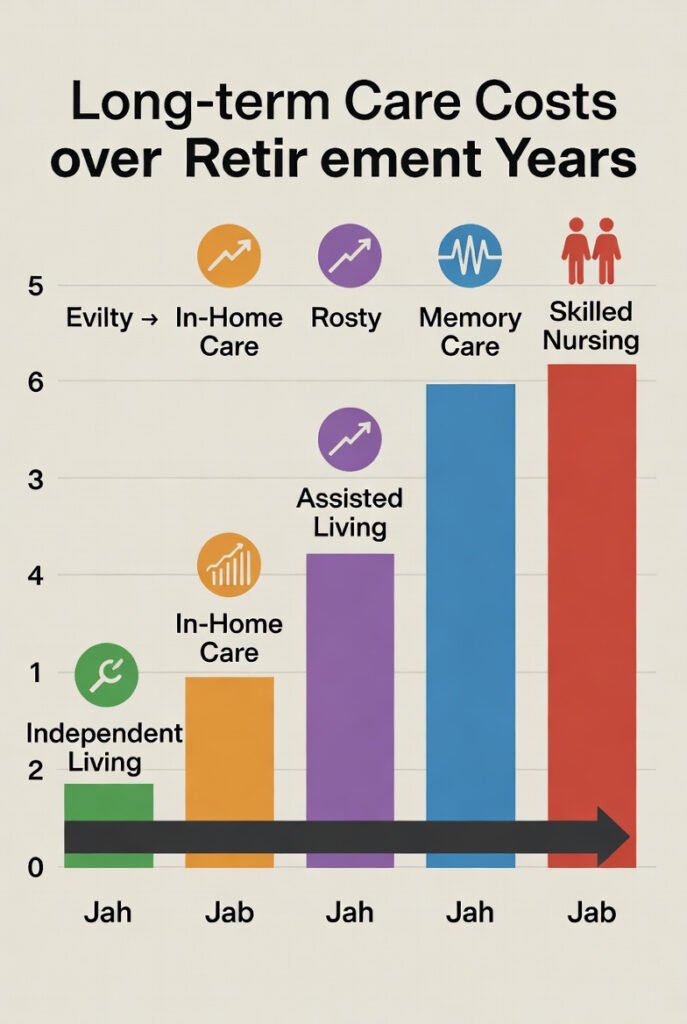
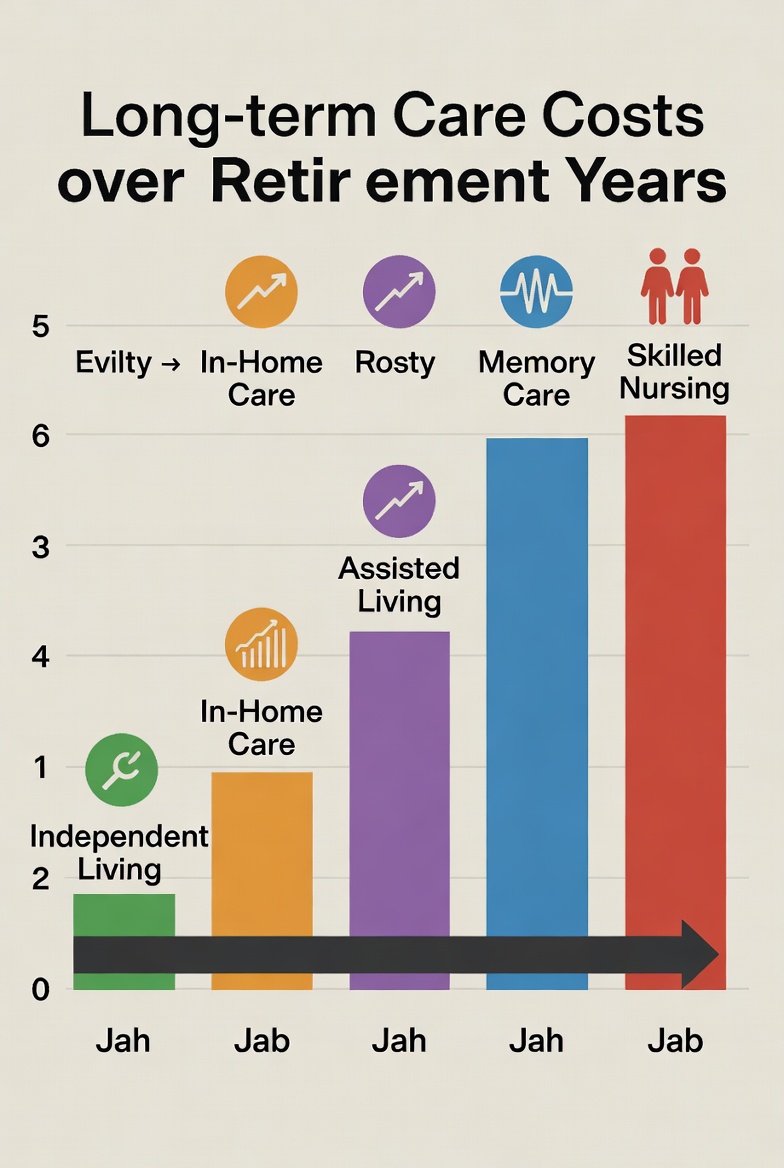
Why Long-Term Care Costs Are the Real Pressure Point
The insurance itself isn’t the problem. The cost and duration of care are.
Long-term care is rarely a short event. It often involves:
Gradually increasing in-home assistance
Transition to assisted living or memory care
Skilled nursing when medical needs escalate
What makes this dangerous financially is timing. Care usually arrives after retirement, when income is fixed and portfolios are being drawn down. Even moderate monthly costs can compound quickly when they persist for years.
Who Long-Term Care Insurance Often Makes Sense For
Insurance tends to make sense when several conditions align. Rarely does a single factor decide it.
You Have Assets Worth Protecting, but Not Unlimited Wealth
This typically includes people with retirement savings, home equity, or investments that could be significantly reduced by multi-year care — but not so much wealth that care costs would be irrelevant.
You’re Healthy Enough to Qualify
Eligibility matters. Chronic conditions, mobility limitations, or cognitive concerns can complicate approval. Insurance is most viable before those issues appear.
You Value Predictability Over Flexibility
Insurance replaces uncertainty with structure. Some people prefer knowing that a defined benefit exists, even with restrictions. Others dislike giving up control.
You Want to Reduce Dependence on Family
For many buyers, this isn’t about money alone. It’s about preserving independence and reducing the likelihood that care decisions fall entirely on children or relatives.
Where Long-Term Care Insurance Commonly Falls Short
This is where expectations often break down.
Average Long-Term Care Insurance Cost by Age
Many policies begin affordably and become more expensive over time. Rate increases are not rare, especially on older policies. A plan that fits at 60 may feel very different at 75.
Coverage Is Partial by Design
Most policies include:
Daily or monthly benefit caps
A limited benefit period
Waiting periods before payouts begin
Insurance usually covers some costs, not all of them.
Claims Are Conditional
Needing help does not automatically trigger benefits. Eligibility depends on functional or cognitive thresholds, documentation, and ongoing reassessment. The policy operates on its rules, not on urgency.
Timing Mistakes Are Expensive
Buying too early can mean decades of premiums before risk is relevant. Buying too late can mean denial or sharply higher costs. There is little room for error.
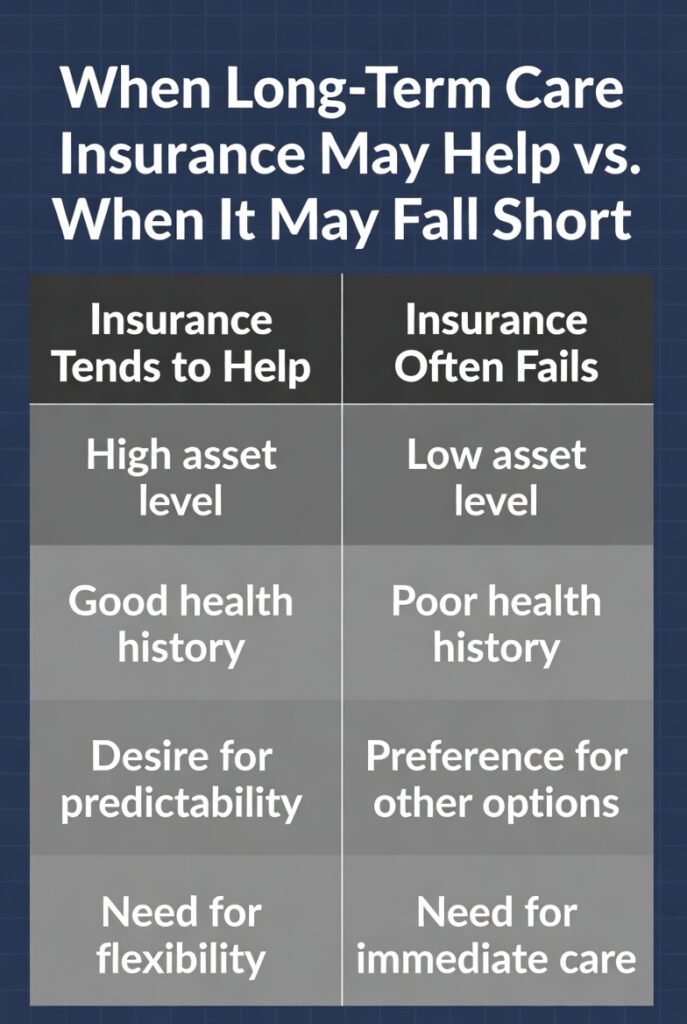
A Simple Decision Matrix
This table isn’t a recommendation. It’s a way to narrow the field.
When Long-Term Care Insurance Is a Bad Idea
Situation Insurance Tends to Help Insurance Often Fails
Moderate assets to protect ✓
Very high net worth ✓
Very limited assets ✓
Stable health history ✓
Significant chronic conditions ✓
Desire for predictable costs ✓
Need for flexibility and control ✓
If you fall mostly on one side, the decision becomes clearer.
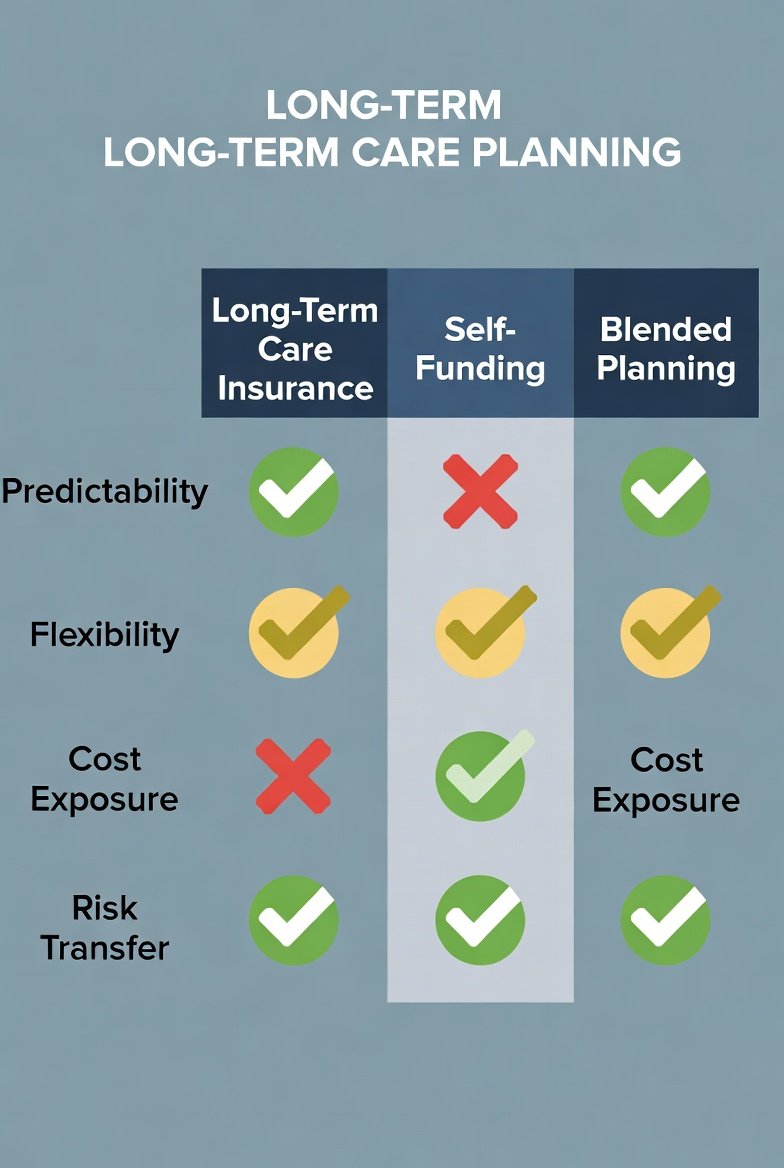
Insurance vs Self-Funding: The Core Trade-Off
At its core, this decision is about certainty versus control.
Insurance caps some financial risk but introduces long-term cost and rigid rules.
Self-funding preserves flexibility but leaves you fully exposed to worst-case scenarios.
Blended approaches reduce extremes but add complexity.
None of these approaches is universally better. The right choice depends on how much uncertainty you’re willing to manage personally.
How Age Changes the Equation
In Your 50s
Insurance is cheaper and easier to obtain, but the risk feels distant. This is where overbuying often happens.
In Your 60s
Risk becomes tangible. Health history matters more. This is when insurance is most commonly evaluated — and most frequently questioned later.
In Your 70s and Beyond
Insurance isn’t the only option, and for some situations, exploring alternatives to long-term care insurance can offer more flexibility.
“Worth it” is not a static answer. It changes with timing.
When Long-Term Care Insurance Is Usually Not Worth It
Insurance often makes less sense when:
Premiums would strain retirement income
Assets are minimal and public programs are likely
Health history complicates eligibility
Flexibility matters more than predictability
The decision is driven by fear rather than planning clarity
Insurance should reduce stress, not create it.
Final Answer: Is Long Term Care Insurance Worth It
For some people, yes. For others, no. For many, only partially.
It tends to be worth it when:
You’re protecting meaningful assets
Premiums are sustainable long-term
Coverage limits are clearly understood
Insurance complements other planning
It tends not to be worth it when:
It’s relied on as a complete solution
It creates financial pressure
Alternatives haven’t been evaluated
The real mistake isn’t choosing insurance or rejecting it. It’s making the decision without understanding what you’re trading.