
Does Medicare Cover Long-Term Care? Where Coverage Stops—and the Real Gap Begins
Many families assume Medicare will cover long-term care if a serious illness or disability occurs later in life.
At first glance, that assumption appears reasonable. Medicare may pay for hospital care, rehabilitation, or skilled nursing services after an injury or illness. Bills are covered. Facilities are involved. Care is happening.
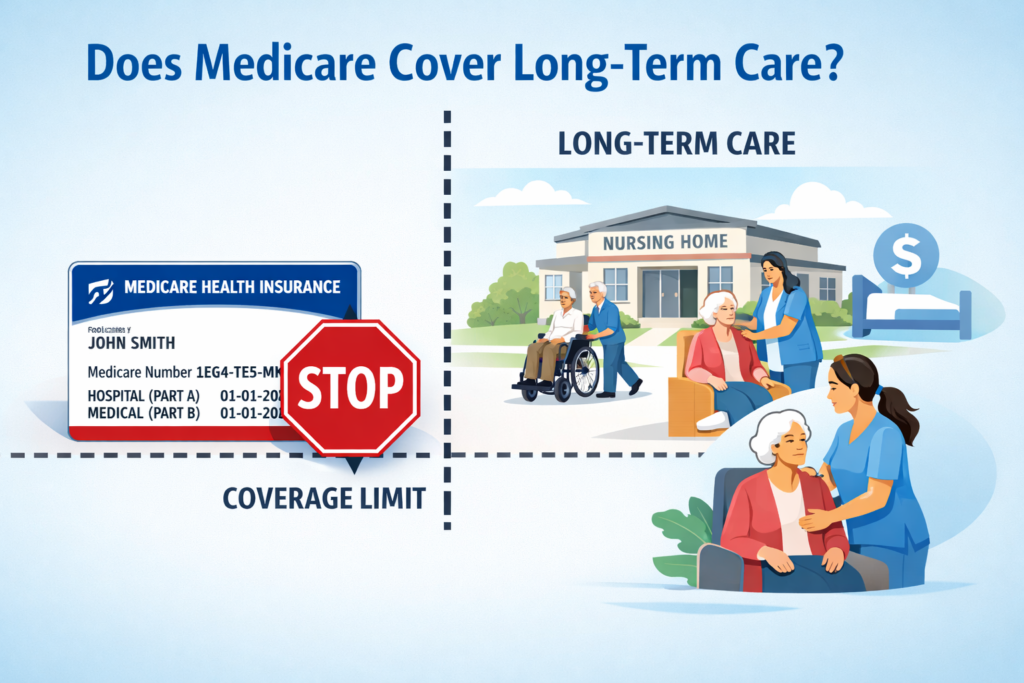
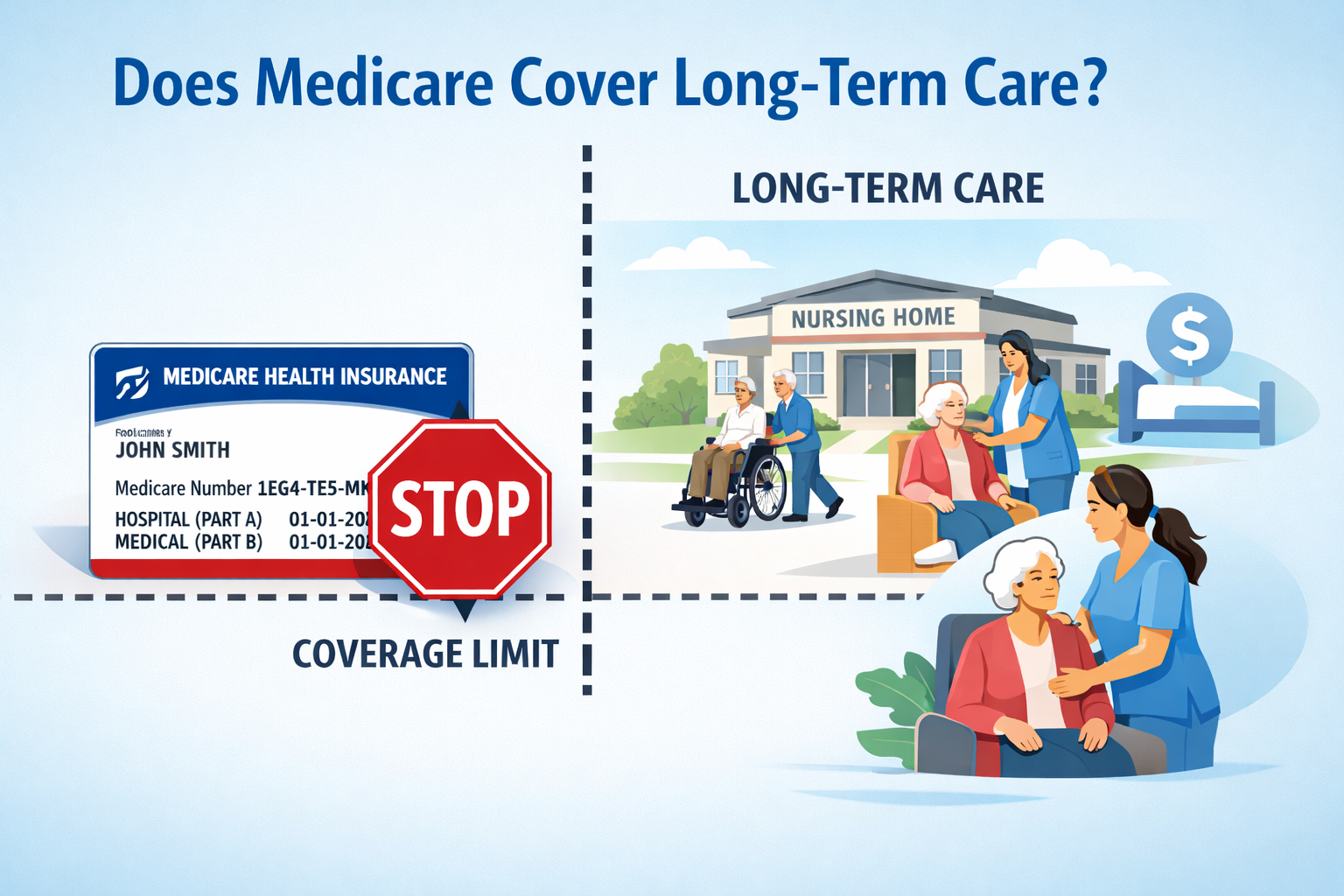
Then coverage stops.
The patient may still need assistance every day, but Medicare no longer pays. Families suddenly face decisions about caregiving, finances, and long-term support.
Understanding why this happens requires understanding what Medicare was designed to do—and what it was never intended to cover.
The Short Answer
No. Medicare generally does not cover long-term custodial care.
Medicare may pay briefly for short-term skilled medical care, typically following hospitalization. But when care becomes ongoing assistance with daily living—what long-term care usually involves—Medicare coverage ends.
The confusion comes from the short period where these two types of care overlap.
What Medicare May Cover vs What It Does Not
Many misunderstandings disappear when the coverage categories are compared clearly.
Type of Care | Covered by Medicare? | Notes |
Hospital care | Yes | Acute medical treatment |
Short-term rehabilitation | Often | After hospitalization |
Skilled nursing facility care | Sometimes | Only while skilled care is required |
Limited home health services | Sometimes | Intermittent medical care |
Assisted living | No | Considered custodial care |
Long-term nursing home residence | No | Ongoing support rather than treatment |
Help with daily activities | No | Bathing, dressing, supervision |
The difference depends on whether the care is medical treatment or ongoing daily assistance.
Why So Many People Believe Medicare Covers Long-Term Care
The misunderstanding typically develops because of how care unfolds after a medical event.
A typical sequence may look like this:
- A hospitalization occurs
- Medicare covers treatment and recovery
- A patient moves to rehabilitation or skilled nursing
- Medicare continues covering care
- Recovery slows
- Coverage stops
From the outside, nothing appears to change.
The patient is still in the same facility and still needs assistance.
But the type of care has shifted—from medical recovery to daily support.
At that moment, Medicare’s responsibility ends.
What Medicare Was Actually Designed to Cover
Medicare functions primarily as health insurance, not long-term care insurance.
Its structure focuses on:
- medical treatment
- recovery after illness or injury
- skilled clinical services
- short-term rehabilitation
It was never designed to fund long-term dependency or daily assistance.
Because of this design, Medicare rules consistently draw a line between skilled medical care and custodial support.
When Medicare May Pay for Care Briefly
Medicare may cover care in a skilled nursing facility or through home health services when specific medical conditions are met.
Typical requirements include:
- a qualifying hospital stay
- physician certification that skilled care is medically necessary
- care that requires licensed medical professionals
- treatment aimed at recovery or stabilization
Examples of services Medicare may cover include:
- physical therapy
- occupational therapy
- skilled nursing care
- certain home health visits
These services are goal-oriented medical treatment, not long-term supervision.
Once treatment shifts from recovery to ongoing support, Medicare coverage ends.
The “100-Day Nursing Home Coverage” Myth
A common belief is that Medicare automatically covers 100 days of nursing home care.
The reality is more nuanced.
Medicare may cover up to a limited number of days in a skilled nursing facility within a benefit period, but coverage continues only while skilled care remains medically necessary.
Coverage can stop:
- before the maximum day limit
- while the patient still requires assistance
- when skilled services are no longer required
The number of days alone does not determine coverage.
The type of care being delivered does.
Skilled Care vs Custodial Care: The Critical Boundary
Understanding the difference between these two types of care explains most Medicare coverage rules.
Skilled Care | Custodial Care |
Medical or therapeutic | Assistance with daily living |
Provided by nurses or therapists | Often provided by aides or caregivers |
Intended to treat or stabilize conditions | Intended to support daily functioning |
Usually temporary | Often long-term |
Long-term care is primarily custodial.
Because Medicare focuses on medical treatment, it generally does not pay once care becomes custodial.
Activities of Daily Living and Long-Term Care
Most long-term care revolves around assistance with activities of daily living (ADLs).
These include:
- bathing
- dressing
- eating
- toileting
- mobility
- supervision due to cognitive decline
Medicare typically does not cover ongoing assistance with these activities.
Even when these needs arise from illness or injury, the care itself is considered custodial.
Why Nursing Homes Create Confusion
Many families assume Medicare covers nursing homes.
This assumption develops because Medicare may pay for short-term stays in skilled nursing facilities after hospitalization.
But the determining factor is not the building.
It is the purpose of the care.
Situation | Medicare Coverage |
Rehabilitation after hospitalization | Often covered |
Skilled nursing treatment | Sometimes covered |
Long-term residential care | Not covered |
The same facility can provide both types of care, but Medicare only covers the medical phase.

What About Home Care?
Home care often causes similar confusion.
Medicare may cover limited home health services when:
- care is medically necessary
- services are intermittent or part-time
- skilled professionals are involved
Examples include:
- therapy visits
- nursing visits
- limited home health aide assistance connected to skilled care
Medicare does not cover:
- full-time home care
- long-term personal assistance
- ongoing supervision
When care becomes continuous support rather than medical treatment, Medicare coverage ends again.
Assisted Living and Memory Care
Medicare generally does not pay for:
- assisted living communities
- memory care facilities
- long-term residential supervision
These environments provide custodial support, not medical treatment.
Residents receive help with daily activities, supervision, and safety monitoring—services that fall outside Medicare’s coverage structure.
Dementia and Alzheimer’s Care
Conditions such as dementia often reveal Medicare’s limits most clearly.
People living with cognitive decline may require:
- constant supervision
- reminders and cueing
- assistance with daily activities
- safety monitoring
These needs can last for years.
But because they involve supervision rather than medical treatment, Medicare coverage is typically limited.
Why Medicare Denial Letters Feel Confusing
Families often receive notices stating:
“Care is no longer medically necessary.”
This does not mean the patient no longer needs help.
It simply means the care being provided no longer qualifies as skilled medical treatment under Medicare’s rules.
Care continues.
Only the payment responsibility changes.
What Happens After Medicare Stops Paying
Once Medicare exits, families typically face three possibilities.
Option | Explanation |
Private payment | Paying directly for care |
Family caregiving | Relatives provide support |
Medicaid eligibility | Public assistance after financial qualification |
Medicaid may cover long-term care for eligible individuals, but qualification generally requires strict income and asset limits.
Because of these requirements, many families experience a period where care costs must be managed privately.
Why Understanding This Boundary Matters
Believing Medicare will cover long-term care can delay important planning decisions.
When families expect coverage that does not exist, they may underestimate:
- long-term care costs
- caregiving demands
- financial exposure
Understanding the boundary early allows more realistic planning.
For example, some readers explore whether long-term care insurance plays a role in managing this risk. That broader planning question is discussed here:
is-long-term-care-insurance-worth-it
Others review alternative strategies for managing care expenses, which are explained here:
alternatives-to-long-term-care-insurance
Understanding how insurance policies structure benefits can also clarify how coverage might work in practice:
long-term-care-insurance-benefit-period
Readers evaluating common insurance statements may find this explanation helpful:
which-long-term-care-insurance-statement-is-true
And for those examining financial exposure across age groups, this overview explains how pricing typically changes:
average-long-term-care-insurance-cost-by-age
The Statement That Is Actually True
After removing assumptions and misconceptions, one statement remains accurate:
Medicare covers short-term skilled care, not long-term custodial care.
The difference lies in whether the care is medical treatment or ongoing daily support.
That boundary explains nearly every Medicare coverage rule related to long-term care.
Where This Page Stops
This article does not recommend insurance products or financial strategies.
Its purpose is narrower.
It defines the point where Medicare coverage ends so families understand what the program was—and was not—designed to do.