
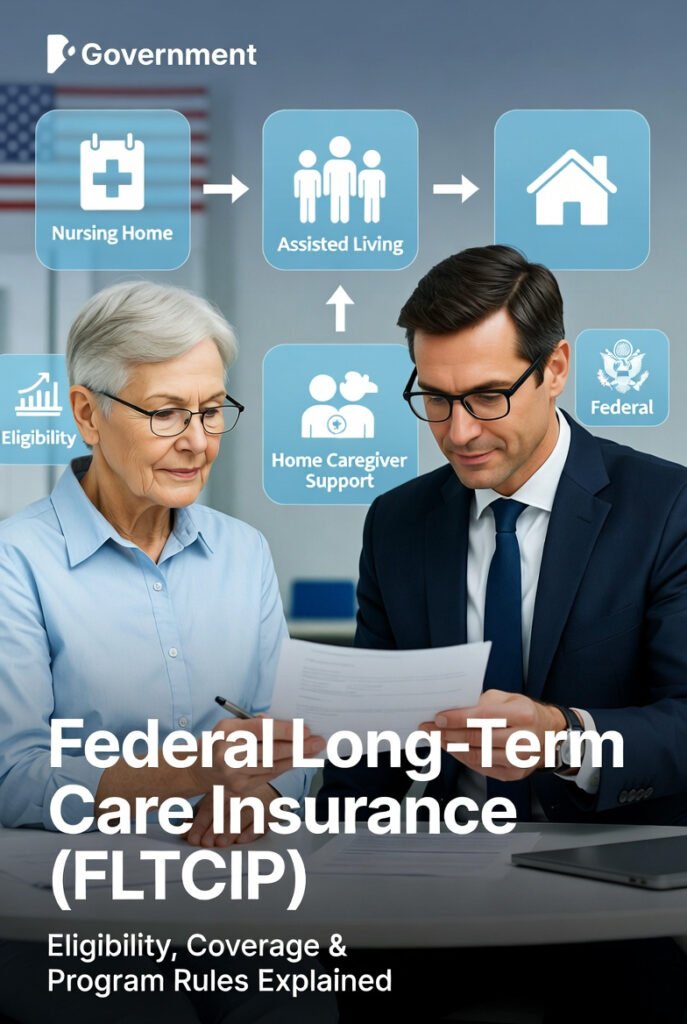
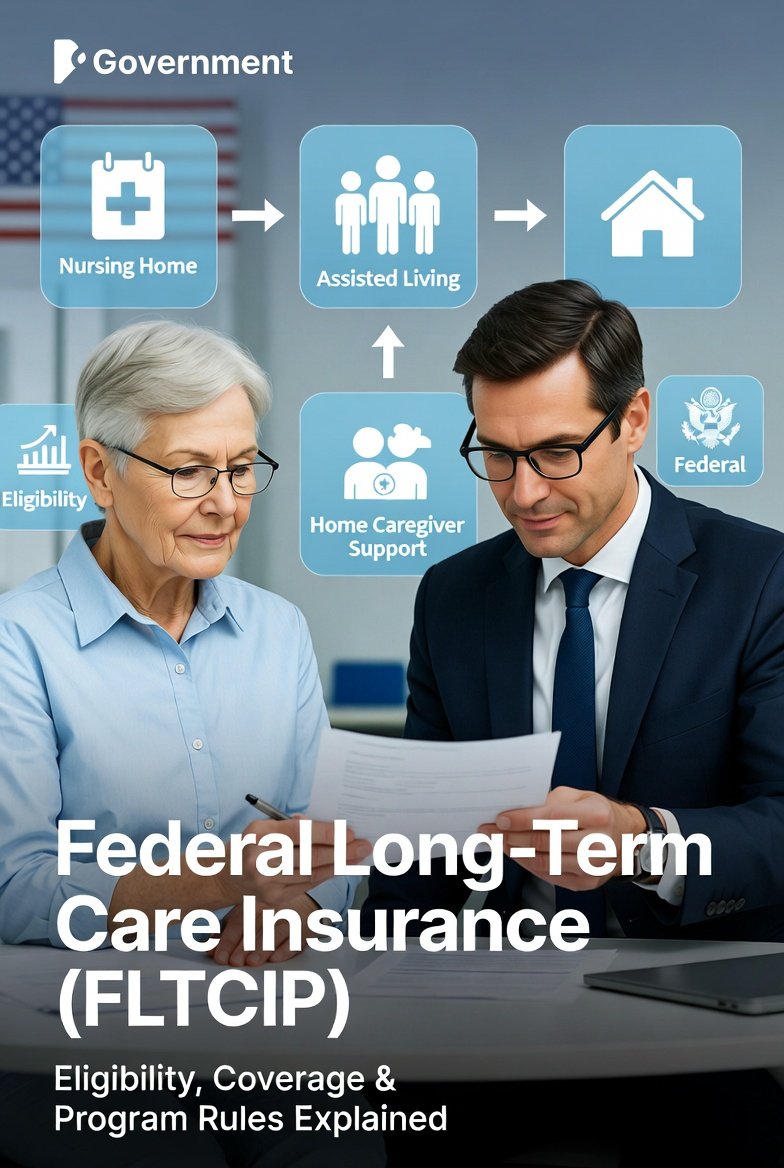
Federal Long Term Care Insurance – FLTCIP Eligibility, Coverage, and Program Rules
Federal long term care insurance usually refers to the Federal Long Term Care Insurance Program (FLTCIP).
This program allows federal employees, retirees, members of the uniformed services, and certain eligible family members to purchase insurance designed to help cover the cost of long-term care services later in life.
Many people assume this coverage is paid for by the federal government.
It is not.
Participants pay the entire cost of premiums themselves. The federal government sponsors the program and negotiates the program structure, but it does not subsidize the insurance.
Understanding how the program works helps federal employees determine whether it fits into their broader long-term care planning strategy.
Readers evaluating the broader decision about long-term care protection can explore
is-long-term-care-insurance-worth-it
which explains when long-term care insurance becomes financially relevant.
What Is the Federal Long Term Care Insurance Program (FLTCIP)
The Federal Long Term Care Insurance Program (FLTCIP) is administered by the U.S. Office of Personnel Management (OPM).
It provides access to group long-term care insurance coverage for members of the federal community.
Program Feature | Description |
Program name | Federal Long Term Care Insurance Program (FLTCIP) |
Administered by | U.S. Office of Personnel Management |
Government premium subsidy | None |
Eligible participants | Federal employees, retirees, military members, and some family members |
Coverage purpose | Long-term care services such as home care or assisted living |
The program exists because extended care needs are usually not covered by Medicare or traditional health insurance.
Why Long Term Care Insurance Exists
Long-term care insurance addresses a specific financial risk.
Many individuals eventually require assistance with basic daily activities, including mobility, bathing, dressing, or supervision due to cognitive decline.
These types of services are typically not covered by traditional health insurance plans or Medicare.
Without insurance, long-term care costs are usually paid through:
- personal savings
- retirement income
- family support
- Medicaid (after asset depletion)
Long-term care insurance helps offset the financial impact of extended care needs.
Readers who want a deeper explanation of coverage duration can review
long-term-care-insurance-benefit-period
which explains how long long-term care insurance benefits may last.
Who Qualifies for Federal Long Term Care Insurance
Eligibility extends to several groups connected to federal employment.
Eligible applicants include:
- Federal civilian employees
- U.S. Postal Service employees
- Federal retirees
- Active and retired members of the uniformed services
- Certain qualified family members
Family eligibility may include spouses and some adult relatives.
Applicants must complete an underwriting process before coverage is approved.
Acceptance is not automatic.
Health history and other risk factors may influence whether an applicant qualifies for coverage.
What Federal Long Term Care Insurance Covers
Federal long term care insurance helps pay for services related to extended assistance with daily living.
Covered services may include:
- Home health care
- Assisted living services
- Nursing home care
- Adult day care programs
- Hospice services
- Respite care for caregivers
Coverage becomes available only when specific eligibility triggers are met.
A detailed explanation of common insurance misconceptions can be found here:
which-long-term-care-insurance-statement-is-true
Benefit Triggers
Most long-term care insurance policies activate benefits when specific impairment thresholds are met.
Two primary triggers are typically used.
Activities of Daily Living (ADLs)
Coverage may begin when an individual cannot perform two or more Activities of Daily Living without assistance.
ADLs generally include:
- Bathing
- Dressing
- Eating
- Transferring
- Toileting
- Continence
Cognitive Impairment
Coverage may also begin when an individual requires supervision due to cognitive impairment, such as dementia or severe memory loss.
Medical documentation from a licensed professional is typically required to confirm eligibility.

How Federal LTC Insurance Benefits Work
Federal long-term care insurance policies use several key policy components.
Daily Benefit Amount
Participants choose a maximum daily benefit that the policy may pay for covered care services.
Benefit Duration
Participants select how long coverage may last after benefits begin.
Elimination Period
The elimination period is a waiting period during which care costs are paid out of pocket before insurance payments begin.
Inflation Protection
Some policy options include inflation protection, which increases benefit levels over time to help keep pace with rising care costs.
Readers interested in typical premium patterns can review
average-long-term-care-insurance-cost-by-age
for broader pricing context.
Enrollment and Underwriting
Enrollment in the federal program involves several steps.
- Submit an application
- Complete underwriting review
- Select coverage options
- Begin premium payments
During underwriting, insurers evaluate the applicant’s health history and medical risk factors.
Some applicants may be declined coverage depending on medical conditions or risk profile.
Federal LTC Insurance vs Private Policies
Federal employees often compare FLTCIP coverage with private long-term care insurance policies.
Feature | Federal LTC Program | Private LTC Insurance |
Eligibility | Federal community | General public |
Premium subsidy | None | None |
Plan structure | Standardized program | Varies by insurer |
Coverage options | Defined program structure | Wider variation |
The main difference is who can apply, not the fundamental structure of the insurance itself.
Readers exploring alternatives to long-term care insurance can review
alternatives-to-long-term-care-insurance
Key Limitations of the Program
Although the program provides important coverage, several limitations exist.
- Premiums are fully paid by participants
- Coverage activates only after impairment triggers are met
- Policy benefits have defined limits
- Care costs may exceed insurance benefit amounts
Understanding these limits helps individuals evaluate how the program fits into their overall financial planning strategy.
The Key Reality
Federal long term care insurance is not a government-paid benefit.
It is a group insurance program available to the federal community, designed to help manage the financial risk of long-term care needs later in life.
Coverage activates only when impairment criteria are met, and the benefits depend on the policy structure selected during enrollment.
Understanding how the program works allows federal employees and retirees to determine whether this coverage fits into their broader long-term care planning strategy.