
Long-Term Care Insurance in Washington State: WA Cares, Its Limits, and the Gaps Families Still Face
Washington State is the only place in the country where long-term care planning starts with a government program instead of a blank slate. That difference changes the conversation—but it doesn’t simplify it.
Many residents believe WA Cares replaces private long-term care insurance. Others assume it is too small to matter at all. Both interpretations miss the real issue.
The program sits in the middle. It helps in specific scenarios. It fails in others. And it introduces planning risks that do not exist in other states.
This guide explains what WA Cares actually does, where it stops, and why families still face long-term care exposure even with the program in place.
WA Cares in Plain Terms
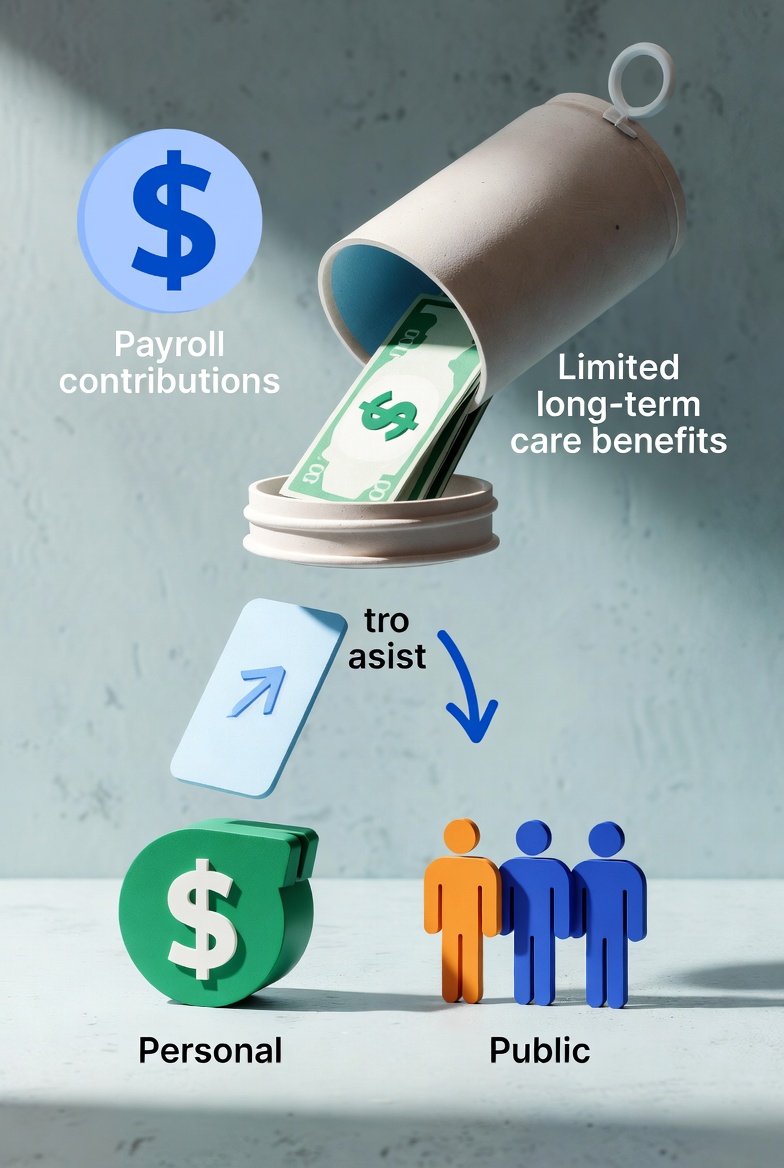
WA Cares is a state-run long-term care benefit funded through a payroll tax on Washington workers. In exchange, eligible residents can access a capped lifetime benefit to help pay for approved long-term care services later in life.
It is not insurance in the traditional sense. There is no policy you can customize. There is no underwriting flexibility. And there is no way to increase coverage beyond the fixed cap.
The program was designed to reduce pressure on Medicaid—not to replace personal planning.
That design goal matters.
The Benefit Cap: Where Confidence Breaks
The WA Cares benefit is capped at a fixed lifetime dollar amount. Once that amount is used, coverage ends permanently.
This creates an immediate mismatch with how long-term care costs actually behave.
Most high-cost care scenarios involve:
Memory care lasting several years
Progressive mobility decline requiring daily assistance
Extended nursing facility stays
In these situations, the state benefit is often exhausted early—sometimes within the first year of sustained care.
This does not make the benefit useless. It makes it finite, which is the most important planning boundary to understand.
Eligibility Is Functional, Not Medical
Eligibility for WA Cares is triggered by functional impairment, not diagnosis.
To qualify, an individual must generally need assistance with multiple activities of daily living such as bathing, dressing, eating, toileting, or transferring.
This distinction matters because:
Early cognitive decline may not qualify
Chronic conditions without ADL impairment may not qualify
Intermittent supervision needs may fall short
Many families assume a medical event automatically unlocks benefits. In practice, eligibility often comes later than expected—after care needs intensify.
Contribution and Vesting Reality
Another gap in common explanations is vesting.
Eligibility depends on having contributed to the program for a required number of years while working in Washington. Workers who:
Spent part of their careers out of state
Took extended time off
Are close to retirement
may not meet contribution thresholds when care is needed.
WA Cares is not universal coverage. It is earned coverage with timing constraints.
The Opt-Out Group: A Different Risk Profile
Some Washington residents opted out of WA Cares by purchasing private long-term care insurance during the limited exemption window.
This group now faces a different set of risks:
Private policy performance over decades
Premium sustainability
Carrier stability
No access to WA Cares benefits later
Opt-out does not mean “more protection.” It means different exposure. Many private policies still carry benefit limits, inflation risk, and underwriting rigidity.
Portability: A Quiet but Serious Limitation
WA Cares is fundamentally state-bound.
Benefits are designed for care delivered in Washington. If retirement plans include relocation—even years later—the value of the benefit may drop sharply or disappear.
This matters more than most people expect. Many families plan to move:
Closer to adult children
To lower-cost states
To specialized medical regions
A benefit that depends on staying put is fragile in a long retirement.
What WA Cares Covers Well
The program works best in early or limited care scenarios, such as:
Short-term in-home assistance
Transitional care after hospitalization
Supplemental support for aging in place
In these cases, the benefit can reduce out-of-pocket strain and delay heavier financial decisions.
This is the program’s strongest use case—and its intended one.
What It Does Not Solve
WA Cares does not:
Cover multi-year facility care
Adjust dynamically to rising care costs
Protect assets or income
Cover spouses
Eliminate Medicaid reliance in prolonged care cases
Most importantly, it does not replace decision-making. It only narrows the window.

Medicaid Still Sits at the Back End
When WA Cares is exhausted, Medicaid becomes the default backstop for many households.
But Medicaid planning carries trade-offs:
Asset spend-down requirements
Limited provider choice
Facility placement constraints
Financial impact on surviving spouses
WA Cares does not change Medicaid rules. It may delay them slightly. That is all.
Private Long-Term Care Insurance: Still Relevant, Still Imperfect
Private long-term care insurance still plays a role in Washington—but not as a blanket solution.
Where it helps:
Higher benefit ceilings
Broader care setting flexibility
Out-of-state portability
Where it breaks:
Health-based eligibility
Premium increases
Policy complexity
Long-term affordability risk
The real question is not “state vs private.” It is how much risk remains after layering.
Self-Funding and Home Equity Assumptions
Some households plan to self-fund care using savings or home equity.
This can work—but only when assumptions hold.
Common failure points include:
Overestimating how fast equity can be accessed
Underestimating care duration
Assuming family caregivers remain available
Ignoring emotional and physical burnout
Self-funding is not wrong. It is fragile when untested.
Family Caregiving: The Invisible Variable
Most plans quietly assume family involvement.
But caregiving often collides with:
Employment obligations
Health limitations
Geographic distance
Relationship strain
When family support erodes, costs accelerate. Plans that depend on it without backup tend to collapse quickly.
The Core Boundary (Clear and Uncomfortable)
Here is the cleanest framing:
WA Cares reduces early exposure. It does not remove long-term financial risk.
If a plan assumes otherwise, it is incomplete.
This does not mean everyone needs private insurance. It does mean everyone needs to know when responsibility returns to personal assets, family systems, or Medicaid.
Who Needs to Pay Attention Now
This topic matters most for:
Workers in their late 40s through early 60s
Adult children coordinating parent planning
Households with moderate assets and limited liquidity
Families expecting relocation in retirement
Waiting until care is imminent removes most levers.
Where This Page Stops
This page is not a recommendation engine. It does not decide for you.
Its job is narrower:
For a broader comparison of private insurance, public programs, and self-funding strategies, see the full decision framework.
to make the planning boundary visible before options disappear.